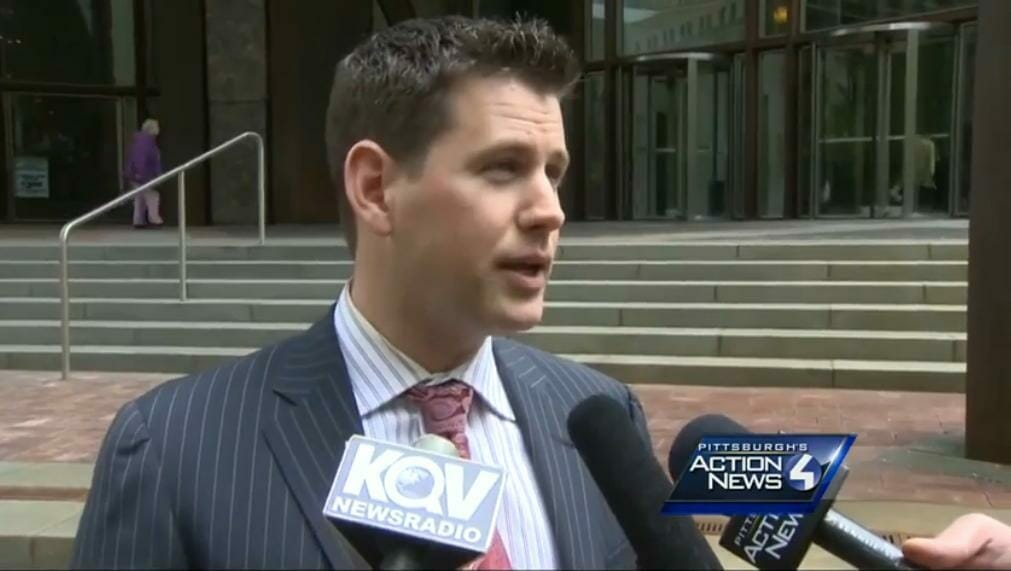
Kirk Burkley, Partner, Eases Public Concern on Behalf of Client
May 7, 2014
This week was a busy week for Bernstein-Burkley P.C. Partner, Kirk Burkley. Following public concern over the conditions of a closed recycling plant, U.S. Bankruptcy Judge Carlota Bohm approved the sale of the plant to Bernstein-Burkley, P.C. client – GGMJS Property LLC. Kirk was featured in a number of news stories (see below) where he discussed GGMJS’ plans to start the cleanup of the site on Vespucius Street in Hazelwood.
The Tax Sale Redemption Period Cannot be Extended in Bankruptcy
April 16, 2014
By Bernstein-Burkley
Bernstein-Burkley was recently involved in an interesting case. In this one, our client purchased a property from a tax sale. The property was part of an estate, and one of the heirs filed a motion to redeem the property in state court pursuant to 53 P.S. § 7293(a). The Tax Sale Redemption Period statute gives the property owner a period of nine months from the day the sheriff issues the deed from the tax sale to redeem the property by paying the purchaser the amount of the delinquent taxes, plus costs and interest.
You may have heard of Chapter 11, but did you know that 1,3,5,7,9,12,13, and 15 are also chapters in the Bankruptcy Code? In this 5 Minute Legal Master Series video, Bernstein-Burkley, P.C. Managing Partner, Robert S. Bernstein, helps navigate the different chapters of the Bankruptcy Code.
Welcome to the 5 Minute Legal Master series where expert attorneys help you master important legal topics. Today, board certified creditors’ rights and business bankruptcy attorney, Robert S. Bernstein discusses the bankruptcy code.
I would like to talk about the bankruptcy code generally and describe what it is, why it is and how to navigate through it. The bankruptcy code is a federal statute, title 11 of the United States code. It is therefore applicable to all states, all people, it is uniform. The areas that make it non uniform is that is involves state law to the extent of lien law, liens are created under state law and exemptions which can be state or federal exemptions. The code is set up in chapter, 1, 3, 5, 7, 9, 11, 12, 13 and 15. 1, 3 and 5 are the administrative chapters, what the court is, what the rights of creditors are, what the rights of a trustee are. The important chapters are the chapters that most people hear about are chapters 7, 9, 11, 12, and 13. Chapter 7 is the straight liquidation bankruptcy, normal bankruptcy, straight bankruptcy, liquidation bankruptcy, it is where the debtor, the person who owes the money and is filing the bankruptcy, takes his/her non exempt assets, delivers them to a trustee appointed by the court, the trustee turns those into dollars and then distributes them to creditors according to a stature priority, pretty simple. In some chapter 7 cases there are no non exempt assets so there is no money, those are called no asset case. But the basic idea of a chapter 7 is liquidate it, turn it into money, give it to creditors.
11 is the business reorganization chapter. We hear that big companies, airlines, hotels, manufactures who file bankruptcy always file first in chapter 11 which gives the debtor, the company that owes the money, the opportunity to propose a plan to restructure its debts over time, it gives it some breathing room. Chapter 11 we have a lot of separate publications, videos but that is the basic idea of chapter 11.
Chapter 13 is a wage earner reorganization for an individual who has a regular income to propose a plan to pay its creditors over time. Chapter 12 is very much the same as chapter 13 but has some special protections for family farmers, again, giving that farmer an opportunity to pay its creditors over time. Chapter 9, which we are hearing more about these days is a municipal reorganization, cities, most recently Detroit, filed a chapter 9 bankruptcy, very special rules, I cannot even begin to address that right now, just know it is there and chapter 15 is for the relationship between US bankruptcies and foreign bankruptcies, it implements foreign bankrupt proceedings in the US if there are assets here, or it allows a company here to sort of export it s bankruptcy to another company.
The important thing is that in every case other than chapter 7, whether it works or not will depend on how it compares to liquidation. Moistly all of those other chapters in order for its reorganization plan to be implemented by the court, it has to give the creditors more than they would get on liquidation, more than they would get on chapter 7. So it is important to know what those chapters are. There is a lot more meat that goes on those bones and in this 5 minute legal master series we have a number of videos on the bankruptcy code. I would recommend them to you for more detail.
You have just heard the 5 minute Legal Master series where expert attorneys help you master important legal topics. For more information on this and other topics please visit 5minutelegalmaster.com
An Analysis of the Potential for Recovery of Punitive Damages in Pennsylvania in an Action Under the Pennsylvania Uniform Fraudulent Transfer Act
March 31, 2014
An Analysis of the Potential for Recovery of Punitive Damages in Pennsylvania in an Action Under the Pennsylvania Uniform Fraudulent Transfer Act.
In Pennsylvania there are statutory provisions in place that allow a creditor to pursue property or assets that were previously owned by a debtor, which have now been transferred to a third party. These statutory provisions also provide for action against the transferee. This statute is commonly referred to as the Pennsylvania Uniform Fraudulent Transfer Act (“PUFTA”). See, 12 Pa.C.S.A. § 5101 et. seq. Many creditors are already aware of the relative benefits and remedies that the PUFTA permits a creditor to pursue, and this article will not explore the more well-known aspects of this statute, or the background regarding how the statute actually works. Instead, this article will focus on the potential for a creditor to seek punitive damages under the PUFTA.
Pittsburgh Riverhounds and Highmark Stadium File Chapter 11 Cases
March 28, 2014
Interesting possible twist to this Chapter 11 filing. Since one filing is the stadium and one filing is the team, and since the Bankruptcy Court has the power to terminate contracts that are not beneficial to the “Debtor,” it is possible that the creditors could take control and terminate the Riverhounds’ contract with the stadium. Because it was owned by the same group, it is possible that the stadium contract is below market, and that there could be financial or strategic reasons to force a termination. Though it’s too early to tell, there are a number of possible outcomes that could result. The lawyers for the companies and the creditors need to be very careful about how they deal with these issues.
By all accounts, this was a difficult debtor. The client had extended an unsecured line of credit to the debtor for use in his computer repair business. Since the time that credit had been granted, the debtor closed the business; got divorced; moved into a rental property; and was paying alimony and child support. Excellent homework revealed surprise hidden assets.
Like most law firms, much use is made of junior lawyers and non-lawyer assistants in the collection and bankruptcy offices. The lawyers with supervisory or management responsibility are accountable under the ethics rules for the conduct of these subordinates. See Model Rules 5.1, 5.2 & 5.3.
Rather than reviewing the requirements of the rules here, we are going to briefly look at how supervising lawyers can perform this supervision. Some of this is obvious. Lawyers in charge of cases supervise the associates, paralegals and secretaries working on the cases. They make sure that there are systems and procedures in place for lawyers to oversee the work of non-lawyers and for senior lawyers to oversee junior lawyers. But that tends to break down when looked at closely. In the collection practice, paralegals often speak with debtors and clients, make strategy decisions, and draft pleadings. Many lawyers rely heavily on these staff members. Today, with many jurisdictions permitting filing electronically, secretaries and paralegals are delegated the use of attorney logins to file documents. It can become very routine and, in some cases, lawyers “instruct” staff generally to take certain steps at certain times (e.g. enter default judgment x days after service) and the lawyer may never actually look at the filing or be asked for specific permission to file.
This is a tough one for me. I have been in cases where I and my firm worked very hard, obtained great results, but produced little return for creditors. The recent Le-Nature’s settlement with K&L Gates was for big bucks, adding to the $100 million obtained so far. Two problems, however. One, their creditors list is so long that these settlements will produce less than 5 cents on the dollar for creditors. Two, the expenses of collection will also be in the millions.
What is pre-trial discovery and when is it used? Did you know there are multiple types? In this 5 Minute Legal Master Series, Board-certified creditors’ rights specialist, Nicholas D. Krawec, explains more about this commonly used tool.
Pretrial discovery as the name would entail being pretrial becomes an issue when you are in contested litigation. The defendant has filed an answer maybe some affirmative defenses and counterclaim. As the plaintiff was brought the lawsuit and it was possible the counterclaim you want as much information as possible about the allegations that are made in the defendants defenses and in the counterclaim. Similarly, the defendant will want as much information as possible from you as a plaintiff regarding your evidence in support of your claim. The evidence that you have to rebut the defendant’s affirmative defenses and the evidence that you have in opposition to his counterclaim.
Discovery, pretrial discovery, is essentially it’s an information and evidence exchange. Each party gets information from the other so that there is no surprise or ambush at trial. But also, this is very important for the creditors perspective, if an answer is like a general denial or a demand for proof for something that is really an effort to buy time or a stall if you will, discovery, pretrial discovery, can be used in order to set up, set the case up for a motion for summary judgment and summary judgment again is another topic. That’s going to be in our legal master series.
But talking about pretrial discovery there are there are two types of pretrial discovery. There’s written discovery which is typically in the nature of requests for admissions which asked, each party asked the other to admit the validity and the truth with certain facts so as to minimize the issues for trials and to eliminate the need to having to prove those fact’s at trial.
Interrogatories are pretty much open ended questions in terms of what the party knows about the transaction and what information they have about transactions. The Request For Production of Documents is a request by the other party to see what documents you have in terms of document’s you will use to prove your case or documents that you have to refute the defendant’s defenses or the defendants counter claim. Documents can also be subpoenaed from a third person or third party who was not a party to the litigation. Either party can do that if there’s a third party who has knowledge and documentation that is relevant to the litigation thats going on.
The other type of pretrial discovery will be that would be depositions that’s oral testimony, before in court reporter the attorney’s office under oath convened by a notice of deposition to a party to the case or a non-party to the case can be subpoenaed to testify as a fact witness. As far as the standard for discovery, in terms of what can be inquired into, it’s not so much whether something is going to be admissible a trial. The area that can be inquired into in discovery is whether or not the area asked about is reasonably calculated to lead to the discovery of evidence which would be admissible at trial.
So there can be questions asked that deposition. Hearsay can be listened to the depositions and you know something that may not be admissible trial that could be admissible, usually are in this for the deposition because you are seeking information that could lead to the discovery of admissible evidence. Pretrial discovery obviously is a is a two way street, as I mentioned earlier, the defendant can take the plaintiff deposition or the deposition of any representative of the plaintiffs company having knowledge of the facts that are in controversy. The deposition notice would be directed to a particular person the plaintiffs organization or the deposition notice can go to a corporate designee where they identify the areas of inquiry and the party who is served with a noticed can identify the person who would respond to that to that notice deposition.
So, the opposing party can serve written discovery on you its a time-consuming process but you were involved in helping the attorney respond to the written discovery and there’s a requirement of full disclosure except for anything that’s protected by attorney client privilege or attorney work product or trade secret of proprietary information.
Otherwise you have to produce documents do have. There is no hiding the document for saving them for trial because, as I said earlier, discovery is to prevent surprise or ambush at trial. Bottom line, if a matter is referred to the attorney for collection you get into contested litigation and discovery starts up, your involvement is not over. It may well increase, particularly once pretrial discovery starts. Your a partner in litigation to your attorney your a partner in the discovery, and its important that you participate fully to the maximum extent possible.
Thank you.
PACA: A Powerful Statute All Lenders Should Know About
February 12, 2014
By Bernstein-Burkley, P.C.
The federal government enacted the Perishable Agricultural Commodities Act, 7 U.S.C. § 499e et seq. (“PACA”), in 1930 to regulate the buying and selling of fresh and frozen produce in the United States. Its purpose is to prevent unfair practices and to ensure prompt payment by the purchasers to the suppliers through the establishment of a PACA trust. The trust is created with all of the purchaser’s proceeds received from the sale of the produce, and provides for the supplier’s right to payment before all other creditors – including secured lenders with blanket liens.
For practitioners that handle matters governed by the Federal Rules of Civil Procedure or the Federal Rules of Bankruptcy Procedure, the use of a Subpoena under those Rules is a valuable, and often overlooked, tool to gather information related to a contested case. The purpose of this article is to provide an overview of Rules governing Subpoenas, Rule 45 in Federal District Court and Rule 9016 in Bankruptcy Court (which adopts Rule 45), including requirements of service and methods to quash or object to the same.
Bernstein-Burkley, P.C., BDO, Inc. (formerly Alpern Rosenthal) and First Commonwealth Bank would like to invite you to the 2nd Annual Lawyers, Guns and Money Shooting Event at Seven Springs on January 13, 2014. Attached is the invitation with rental rates and additional information. The shoot will begin at noon with lunch to follow and this year’s charitable proceeds will benefit The Debt Advice Clinic through the Allegheny County Bar Association. Continue reading “2nd Annual Lawyers, Guns and Money Shooting Event”
This website uses cookies to analyze performance and provide you with the best user experience possible. By clicking “Accept Cookies” you are consenting to our use of such cookies. Click here for more information on our cookie policy, which includes additional details for California residents.